11TH INTERNATIONAL GITA CONFERENCE
Message from the Director
Kurukshetra University, Kurukshetra · 14–16 December 2026
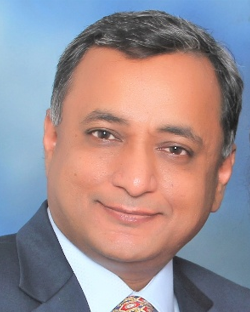 Prof. Dr. A. R. Chaudhri
Conference Director
Prof. Dr. A. R. Chaudhri
Conference Director
It gives me immense pleasure to welcome scholars, academicians, researchers, spiritual thinkers, practitioners, and seekers of knowledge to the 11th International Gita Confer-ence, being organized by Kurukshetra University, Kurukshetra, in collaboration with the Kurukshetra Development Board, from 14th to 16th December 2026. The central theme of this year’s conference, “Srimadbhagavad Gita: Traditions and Influence, Bridg-ing Cultures across the World,” reflects both the timelessness of the Bhagavad Gita and its continuing capacity to engage with the intellectual, ethical, social, cultural, and global con-cerns of our age.
The choice of Kurukshetra as the venue is profoundly significant. Kurukshetra is not mere-ly a geographical location; it is a civilizational and spiritual landscape deeply embedded in the Indian knowledge tradition. It is revered as the sacred land associated with the estab-lishment of dharma and righteousness and, most importantly, as the setting in which Bhagwan Krishna imparted the divine wisdom of the Bhagavad Gita to Arjuna on the battle-field. The conference invitation describes this sacred region as spanning 48 kos and lying between the Saraswati and Drishadwati rivers. For millennia, this landscape has been asso-ciated with the spiritual and intellectual traditions of sages, ashrams, yajnas, and religious discourse.
The presence of the Saraswati River adds another important dimension to the intellectual character of the conference. The Saraswati occupies a distinctive place in India’s civilization-al memory and in the study of the evolution of the Indian knowledge tradition. The Centre of Excellence for Research on the Saraswati River at Kurukshetra University, which I have the privilege of directing, approaches the Saraswati through an interdisciplinary per-spective that brings together geological, geographical, historical, archaeological, cultural, and textual dimensions of inquiry. My academic engagement with the Saraswati has reinforced the importance of examining India’s civilizational heritage through rigorous research while simultaneously appreciating the knowledge traditions that have developed around its sacred landscapes. This conference therefore provides a meaningful platform to place the Gita with-in the wider context of the Saraswati–Sindhu civilization and the Indian knowledge tra-dition.
The first plenary session particularly reflects this intellectual convergence. It brings together the Centre of Excellence for Research on the Saraswati River and the Department of Geology, in network collaboration with the Indira Gandhi National Centre for the Arts, the Haryana Sahitya and Sanskriti Academy, and the Sapt Sindhu Foundation. Its focus—“Srimad Bhaga-vad Gita, the Saraswati-Sindhu sanatan civilization, and the Indian knowledge tradi-tion: A dharma and sanskriti based perspective for global peace, water crisis, and a developed Bharat”—invites reflection on how ancient knowledge frameworks may con-tribute to contemporary questions of peace, sustainability, water, civilization, and national development.
At the heart of the Gita is a profound engagement with the human condition. Its teachings address questions that transcend historical and cultural boundaries: How should an indi-vidual act in situations of uncertainty? How can one perform one’s duties without being overwhelmed by attachment to outcomes? How does one cultivate inner balance amid suc-cess and failure? How can individual excellence be harmonized with social responsibility and lokmangal? These questions are particularly significant for today’s youth, who are navi-gating unprecedented technological change, intense competition, rapid social transfor-mation, information overload, and increasing uncertainty about the future.
The Gita’s emphasis on duty, disciplined action, equanimity, self-mastery, ethical dis-cernment, resilience, and responsible engagement with the world therefore deserves renewed academic attention. Its relevance should not be confined to the spiritual sphere. The conference deliberately explores its implications for youth and media, entrepreneur-ship, management, healthcare, law, environmental responsibility, sustainable communities, tourism, education, cultural exchange, and global development. The dedicated session on “Youth and Media: Relevance of Srimadbhagavad Gita in the present scenario” is espe-cially pertinent in an age when young minds are continuously shaped by digital media and rapidly changing information environments.
The conference has consequently been conceived as a genuinely multidisciplinary and in-ternational academic forum. Alongside two plenary sessions, it features thirteen technical sessions and a multidisciplinary poster presentation. The thematic breadth ranges from the Gita’s relationship with tourism and hospitality, sustainable communities, Sanskrit and Indi-an knowledge traditions, nutrition and global health, philanthropy and Hindi literature, healthcare ethics, universal justice, and the chronology of the Gita, to environmental ethics, global development, youth and media, entrepreneurial resilience, and symbolism in Indian visual culture.
This breadth is important because the Gita has never been a text confined to a single disci-pline. Its philosophical insights can enter into dialogue with social sciences, humanities, nat-ural sciences, management, law, health sciences, environmental studies, communication, tourism, and the arts. Such interdisciplinary engagement can help us move beyond merely interpreting the Gita to exploring how its principles may illuminate contemporary human and societal challenges.
The second plenary session, focusing on the influence of Buddhism in the Kuru region through literary sources, archaeology, and pilgrimage, further broadens the civilization-al dialogue and reminds us that Kurukshetra has historically been a meeting ground of di-verse intellectual and spiritual traditions. The conference thus seeks not only to examine the Gita within its own philosophical and cultural context but also to understand its interac-tions, interpretations, and influence across traditions and cultures.
The phrase “Bridging Cultures across the World” in the conference theme is therefore both an aspiration and an academic proposition. The Gita emerged from a particular histori-cal and civilizational context, yet its questions and insights have travelled far beyond geo-graphical boundaries. A meaningful international dialogue should neither universalize the text by removing it from its context nor confine it to a single cultural framework. Rather, it should encourage rigorous scholarship, comparative interpretation, and dialogue among traditions.
It is my conviction that the 11th International Gita Conference will provide such a platform. It will bring together established scholars and emerging researchers to examine the Gita through multiple intellectual lenses, while also providing an opportunity to experience the sacred landscape of Kurukshetra—the land associated with the profound dialogue between Krishna and Arjuna and with the wider cultural memory of the Saraswati.
I invite scholars, researchers, students, spiritual thinkers, and all those engaged with the study of the Bhagavad Gita and the Indian knowledge tradition to participate in this im-portant academic gathering. May our deliberations in Kurukshetra enable us to rediscover the depth of our intellectual heritage and, at the same time, explore its relevance to the chal-lenges of the contemporary world. May the wisdom of the Gita inspire a renewed commit-ment to knowledge, ethical action, social responsibility, cultural dialogue, and the pursuit of a more harmonious and sustainable future.
With warm regards and best wishes,
Prof. Dr. A. R. Chaudhri
Conference Director, 11th International Gita Conference
Director, Centre of Excellence for Research on the Saraswati River
Chairperson, Department of Geology
Dean Students’ Welfare
Kurukshetra University, Kurukshetra